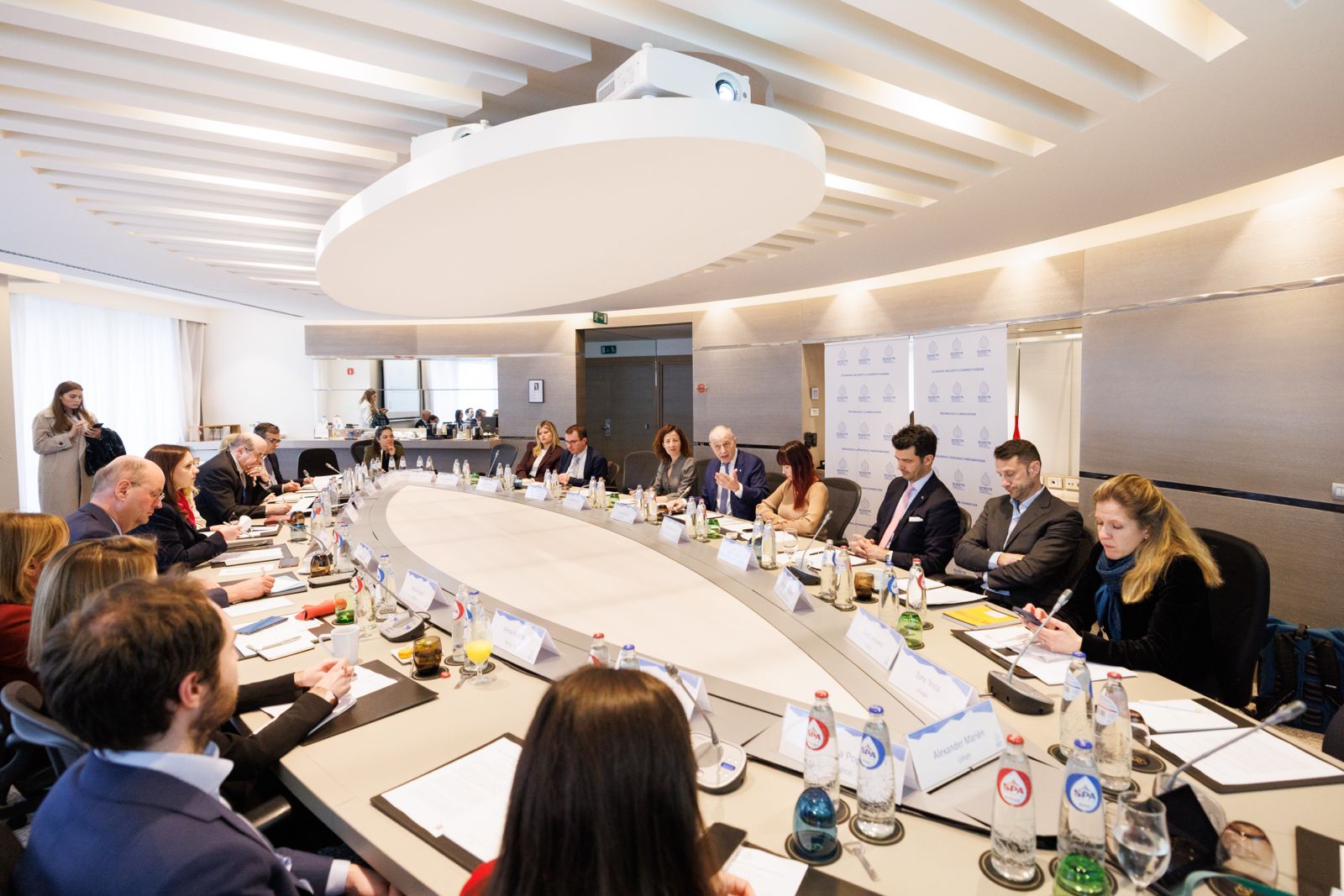
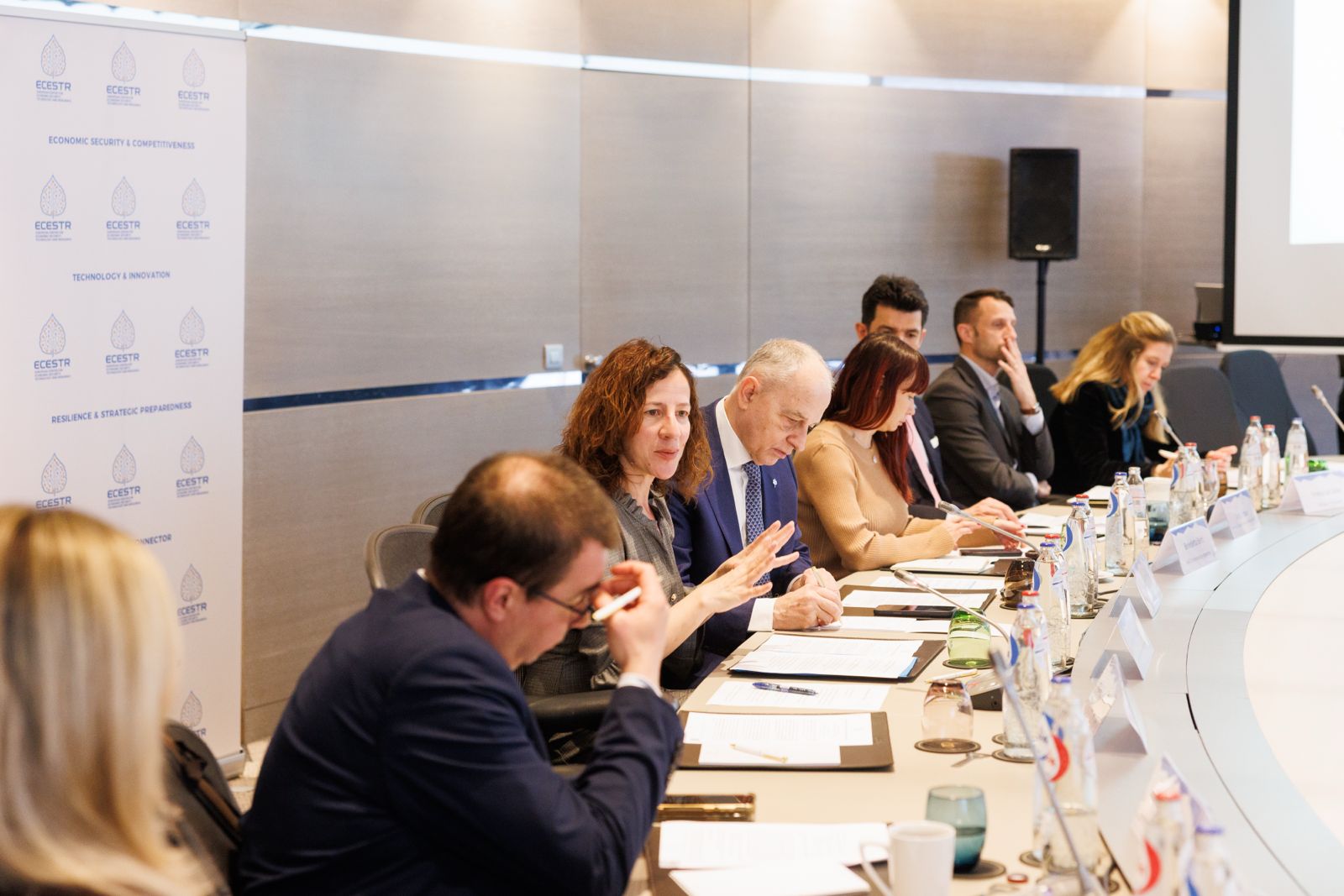
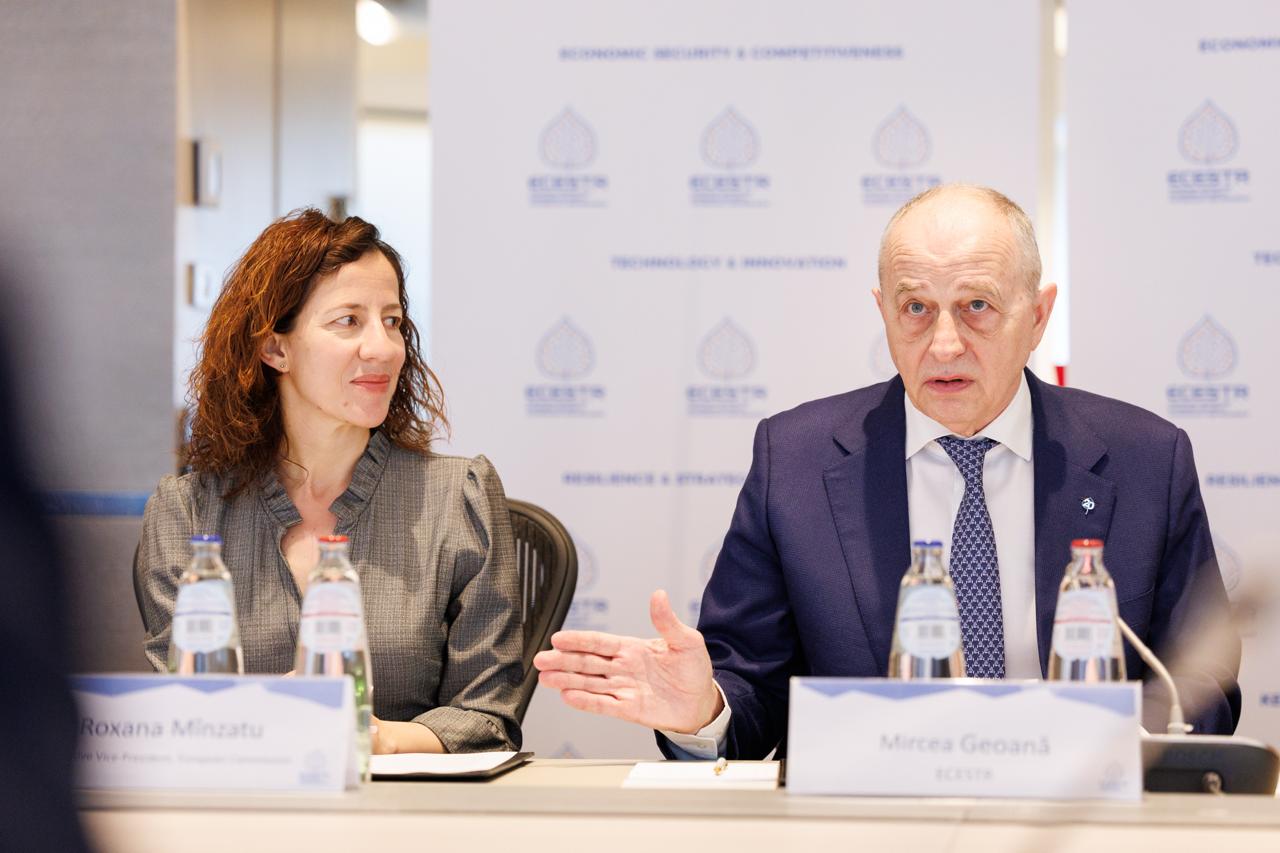
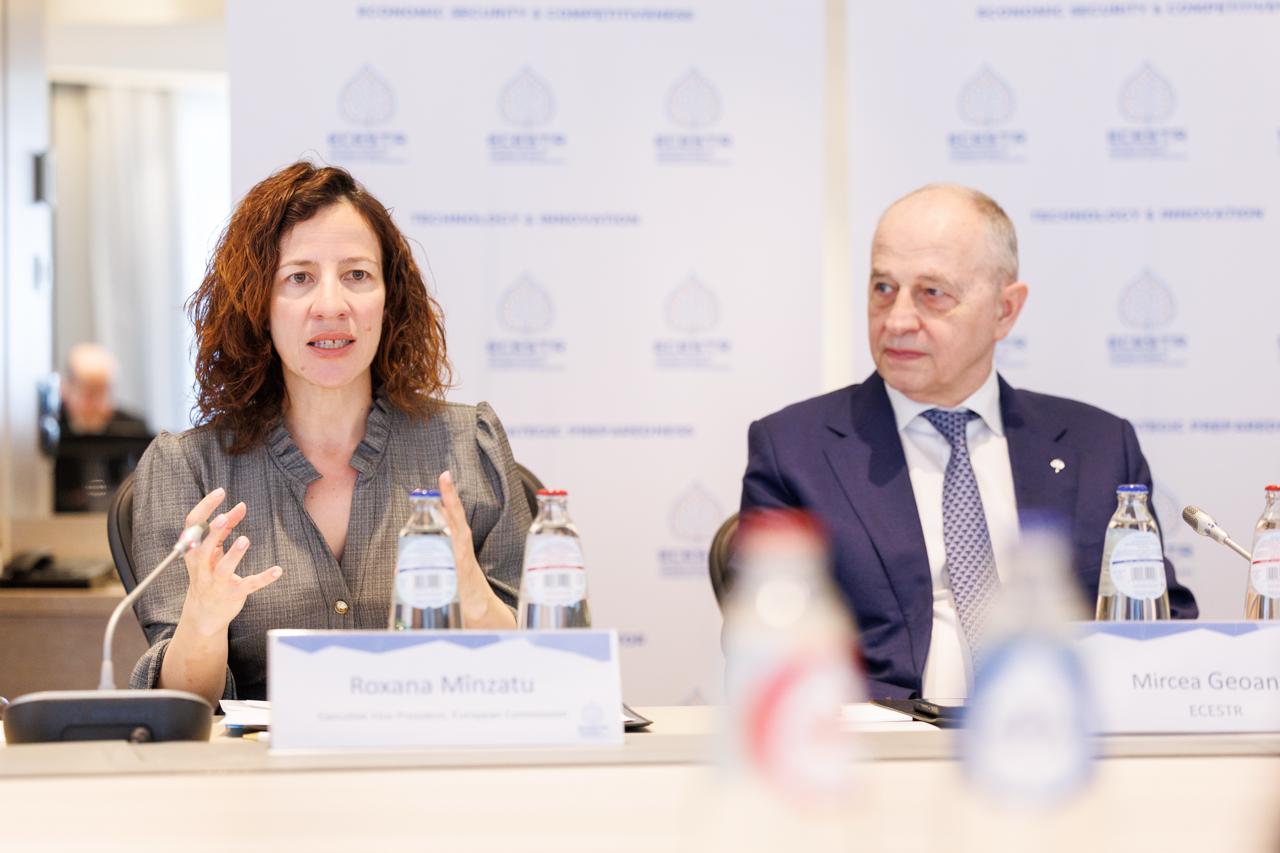
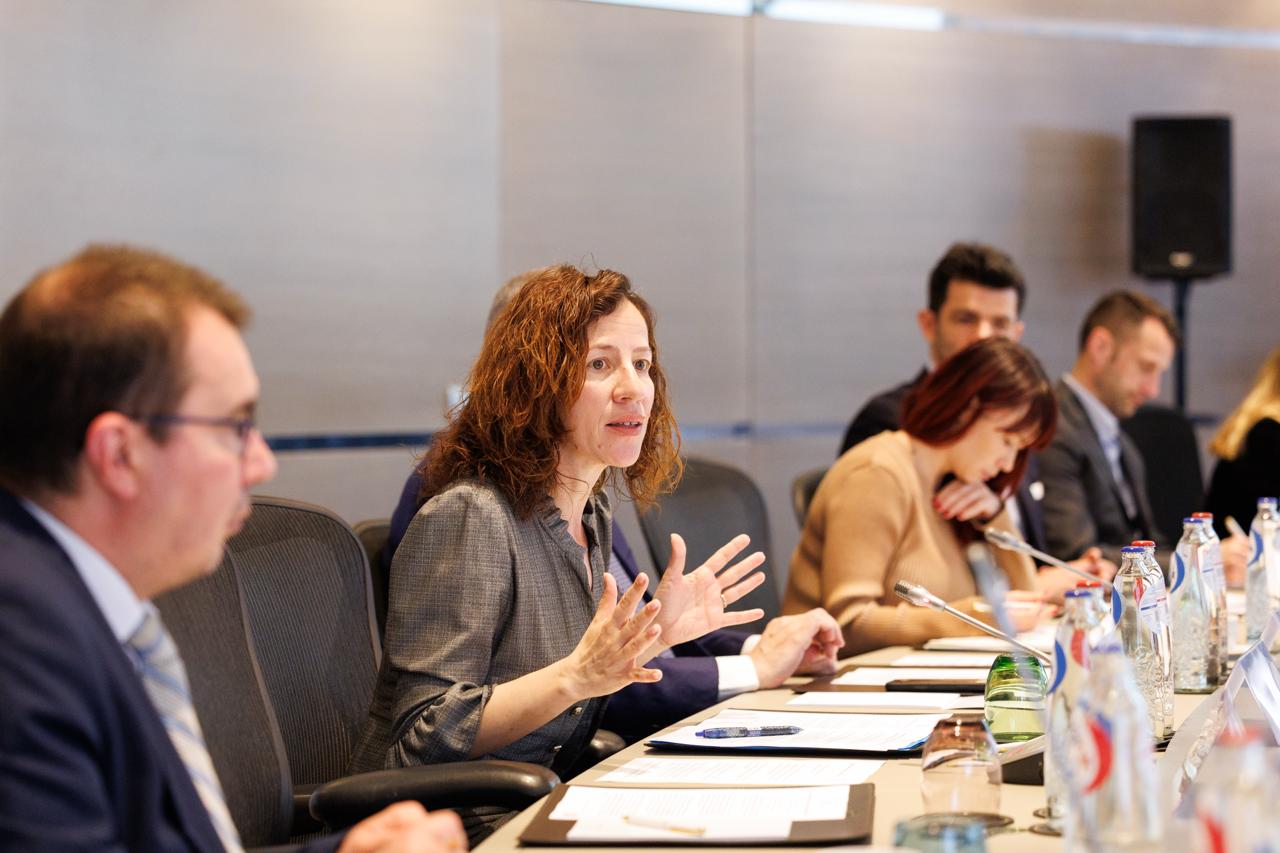
On Monday, March 16, 2026, the European Center for Economic Security, Technology and Resilience (ECESTR) was officially launched in Brussels. The initiative, developed by the Aspen Institute Romania—which celebrates 20 years of activity this year—was inauguratedin the presence of Roxana Mînzatu, Executive Vice-President of the European Commission for Social Rights and Skills, Quality Jobs and Preparedness.
Starting from the premise that economic security and resilience are integral parts of the broader concept of security, the European Center for Economic Security, Technology and Resilience, based in Brussels, responds to the European Commission’s Strategy and Communication on economic security. It serves as a platform for dialogue, decision-shaping, and impact analysis between the supranational level (EU, NATO), Member States and allies, and the business community.
The Center’s activities cover issues such as critical industries and infrastructures, including telecommunications and space, financial services, energy, health, cybersecurity, and the resilience of raw material supply chains, with a focus on the impact of emerging technologies (artificial intelligence, biotechnology, quantum) on security and resilience at both national and European levels.
“In a world where economic security, resilience to shocks, the technological revolution, and external dependencies affect European competitiveness and interests, we must never forget the impact of these transformations on people and our societies,” stated Roxana Mînzatu.
“The mission of ECESTR is to inform and ensure coherence between EU and NATO decisions on economic security, technology and resilience, and the actions taken at Member State level, as well as their impact on the economy and society,” emphasized Mircea Geoană.
During the launch conference was also presented the first analysis on lessons learned from the transition from 5G to 6G, incorporating artificial intelligence.
ECESTR’s Advisory Board brings together prominent international leaders and experts in politics, economics, security, and technology, who contribute strategic expertise to the Center’s initiatives. Members include Mircea Geoană, former NATO Deputy Secretary General; Paolo Gentiloni, former European Commissioner for Economy and former Prime Minister of Italy; Natalia Gavrilița, former Prime Minister of the Republic of Moldova; Cathryn Clüver Ashbrook, expert in political and economic strategy; Camille Grand, specialist in European security and defense; Dr. Rebecca Harding, economist specializing in economic security; and Andrei Iancu, innovation expert and former Director of the U.S. Patent and Trademark Office.
More information about the Center for Economic Security: https://ecestr.eu